Maybe We've Been Looking at the Circular Economy the Wrong Way
When people talk about the circular economy, it often sounds like something completely new. A futuristic concept. New technologies. Innovative materials. Businesses completely reinventing the way they work. But lately I've found myself noticing something quite different. The more I work with businesses, the more I realise we've been surrounded by circular business models for a very long time. We just haven't always called them the circular economy.


Think about it.
Tailors have helped clothes last longer for generations. Libraries have always shared resources. Cobblers have always repaired shoes. Dry cleaners extend the life of textiles every single day. Second-hand shops have been giving products a second, third and fourth life for decades.
Tool hire companies, event rental businesses and camping equipment rental all follow the same principle: access instead of ownership. Refillable milk bottles are hardly a new invention. And repair cafés, makerspaces and community tool libraries simply build on ideas that people have practised for centuries—sharing, repairing and helping each other. The list goes on.
When I started collecting examples for a social media post, I thought I'd end up with twenty or thirty. Instead, the list just kept growing. Refurbished computers. Battery remanufacturing. Industrial equipment maintenance. Furniture restoration. Car sharing. Hotel furniture resale. Public sector furniture reuse. Solar panel maintenance. Community kitchens. Food rescue organisations. Building material reuse centres. The more I looked, the more examples I found.
And then it struck me. The circular economy isn't one business model. It's hundreds of business models. Some are centuries old.
Some have evolved over decades. Others are only just emerging. Many businesses are already creating circular value without ever using the words circular economy. I find that incredibly encouraging. Because if you're a business owner, becoming more circular doesn't necessarily mean starting from scratch. It might simply mean recognising what you're already doing well. Or looking at your existing products and services from a different perspective. Could they last longer? Could they be repaired? Shared? Refurbished? Returned? Resold? Could you create more value from something that's currently being discarded?These questions often lead to surprisingly practical opportunities.
Over the past few years, I've had the chance to work with many different kinds of businesses, and one thing has become very clear to me. Most organisations don't struggle because they lack ideas. They struggle because they don't know which idea to pursue first - and how to get it done. Should they focus on repair? Refurbishment? A take-back system? A new service? Sharing? Reuse? Something completely different?The possibilities can quickly become overwhelming.
That's why I've become less interested in asking businesses:
"How can you become circular?"
…and much more interested in asking:
"What's your first circular business move?"
Because every business starts somewhere. Sometimes it's adding a repair service. Sometimes it's designing a take-back scheme. Sometimes it's creating a refurbishment offer. Sometimes it's simply recognising that you're already more circular than you thought—and building from there.
That idea became the foundation for The First Circular Business Move. Rather than focusing on theory, I wanted to create practical tools that help businesses identify their next realistic step. Through workshops, canvases and guided conversations, the goal is to make circular economy feel less overwhelming and more actionable—whether a business is taking its very first step or looking for a clearer direction after experimenting with circular initiatives.
The circular economy doesn't require every business to reinvent itself overnight. More often, it starts by recognising the opportunities that are already there—and deciding which one is worth exploring first. If you're curious about what your first circular business move could be, I'd love to help.
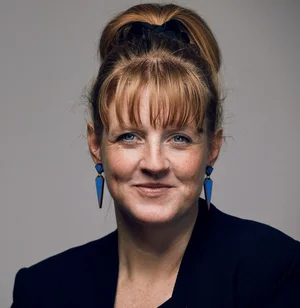
Evelina Lundqvist,
co-founder of The Good Tribe