How Circular Is My Own Consultancy? A Reality Check…
I spend a lot of time helping businesses identify their first circular opportunities. Recently, though, I realised it was time to ask myself the same question I ask my clients:
How circular is my own business?
It’s an uncomfortable question. Not because I don’t care—but because, like many consultants and freelancers, I know exactly where my business still falls short. So I rated myself against five simple circular business ideas that almost every knowledge-based business can explore.
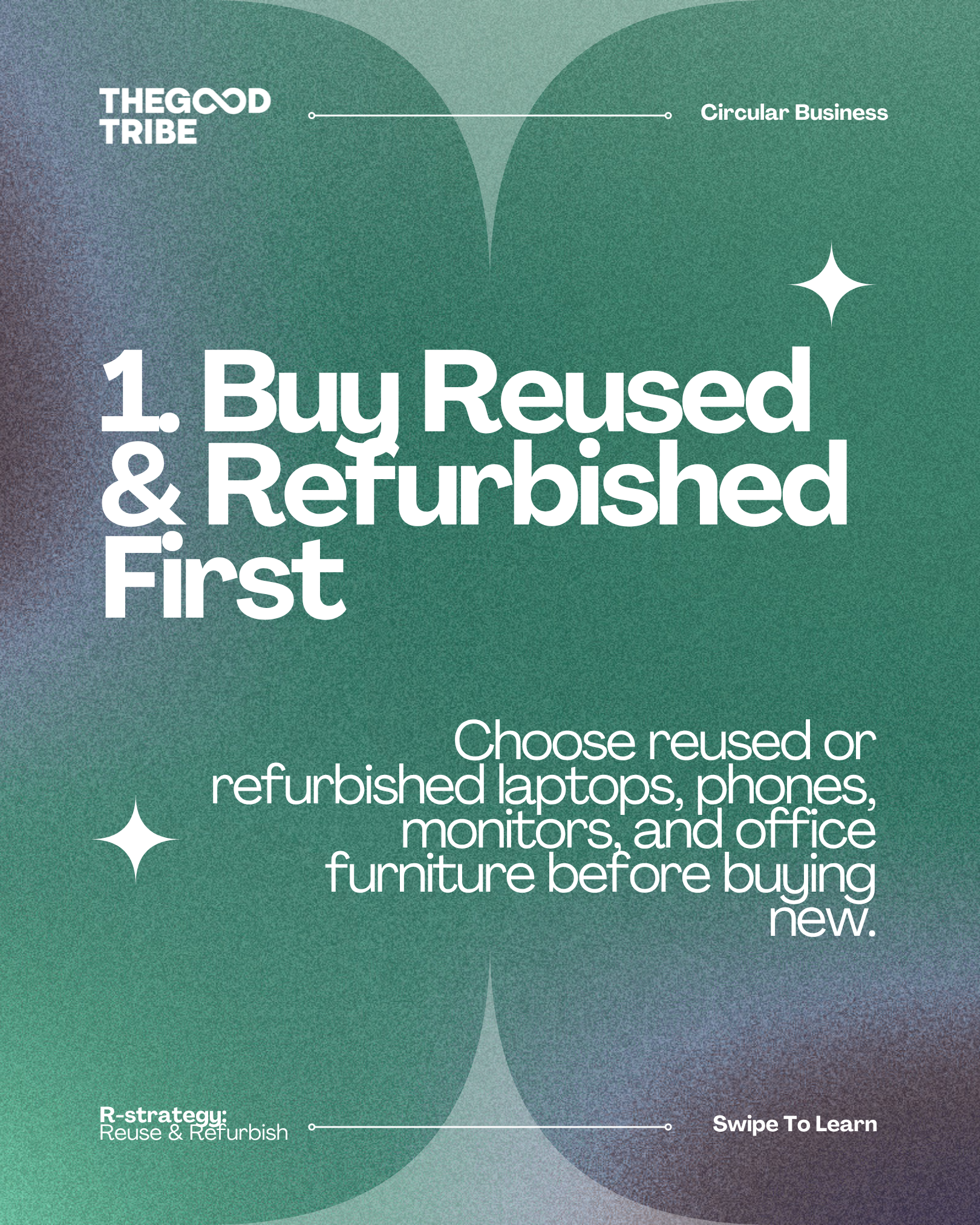
1. Buy Reused & Refurbished First ⭐⭐⭐⭐⭐
This one is almost too easy. Most of my laptop, phone, office equipment, and furniture have been bought second-hand or refurbished. Today there are excellent suppliers offering high-quality refurbished technology, often at lower prices than buying new. For me, buying refurbished has become the default rather than the exception.
If every consultant did the same, we’d already be keeping thousands of perfectly good devices in use for much longer. Sometimes the simplest circular action is simply not buying new.
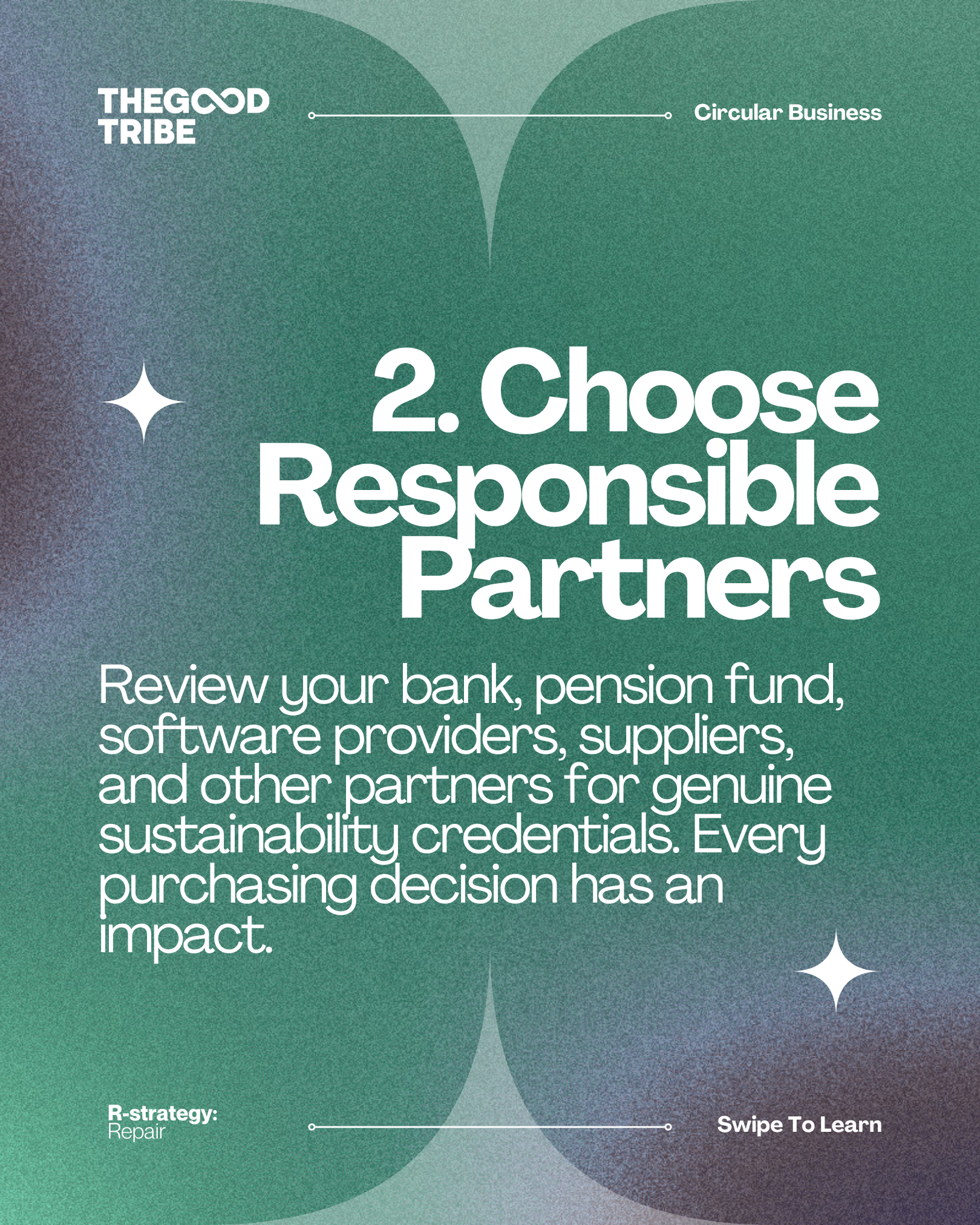
2. Choose Responsible Partners ⭐☆☆☆☆
Here’s where I struggle. Really struggle. Like most consultants and freelancers, my business depends almost entirely on digital services.
Cloud storage. Video meetings. Project management software. AI tools. Email. Design platforms. Accounting systems.
I rely on dozens of companies every single day. Some might have ambitious sustainability goals. But most of them… very much less so. The problem isn’t that I don’t want to switch. The problem is that replacing an entire digital ecosystem is incredibly difficult. Every tool connects to another. Learning new systems takes time. Clients expect compatibility. Sometimes there simply isn’t a better alternative available.
Then there are banks. Pension funds. Insurance providers. Investment funds. These decisions can have a far bigger impact than whether I buy recycled notebooks or reusable tea mug.
And lately, another topic has entered the conversation: AI. As AI becomes part of our everyday work, so do questions about electricity demand, water consumption, critical minerals, and the rapidly expanding network of data centres supporting these services. I’m not suggesting we stop using digital tools.
But I do think we need a more honest conversation about digital sustainability. For me, this has become the most frustrating part of trying to build a circular consultancy. It’s also the area with perhaps the greatest opportunity for change. So I’m asking for help.
How do you approach this?
Have you found banks, pension funds, software providers, or digital services with genuinely strong sustainability credentials? I’d love your recommendations.
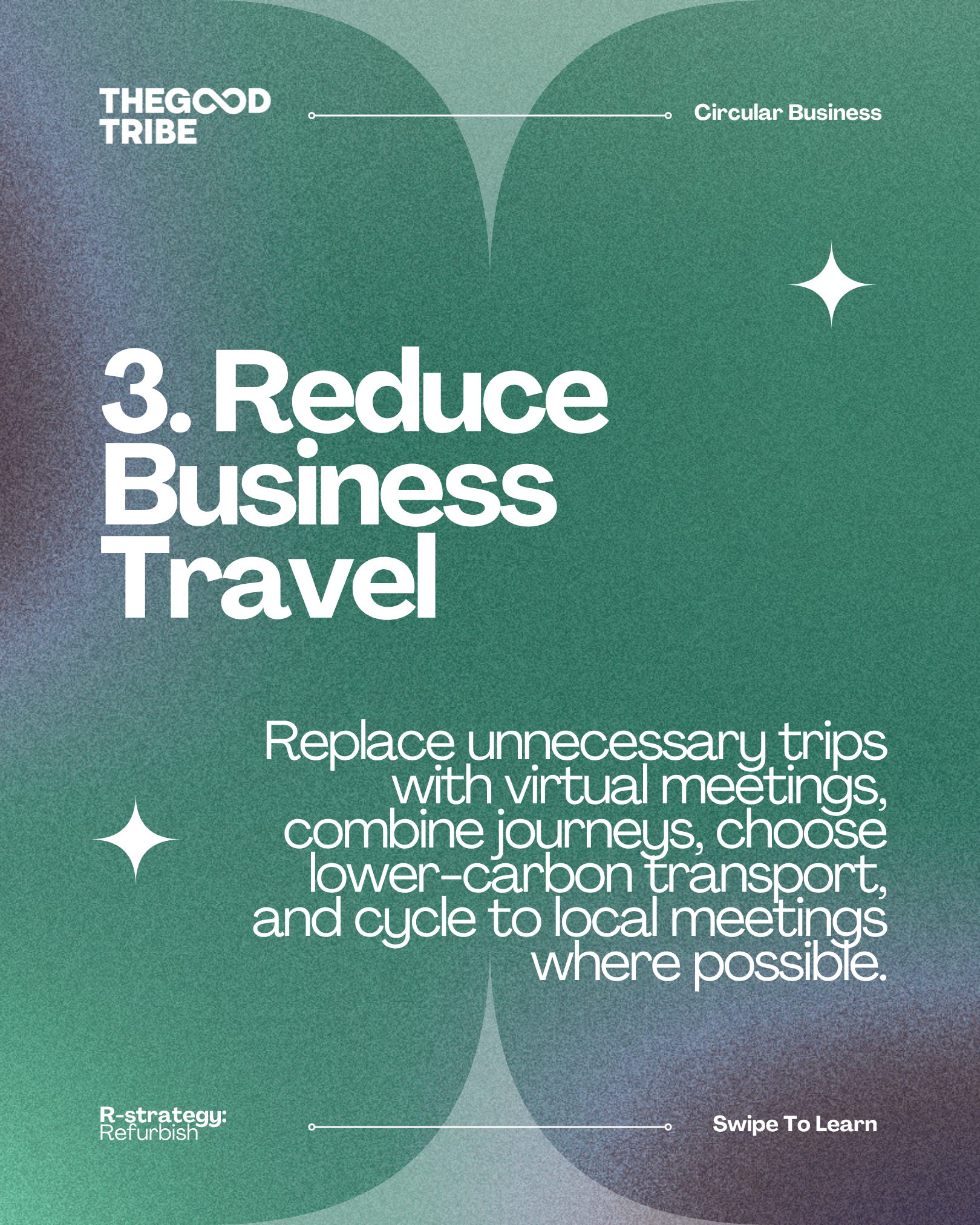
3. Reduce Business Travel ⭐⭐⭐⭐☆
This one is relatively straightforward for me. Much of my work happens online, and when I travel locally, I usually cycle, walk, or take the train. (Hello, KlimaTicket!) Of course, not every meeting should become a video call. Being in the room matters. Workshops, collaboration, trust-building, and creative conversations often benefit from meeting in person. But I think we’ve also learned that not every journey creates enough value to justify it.
Finding that balance is part of the transition.
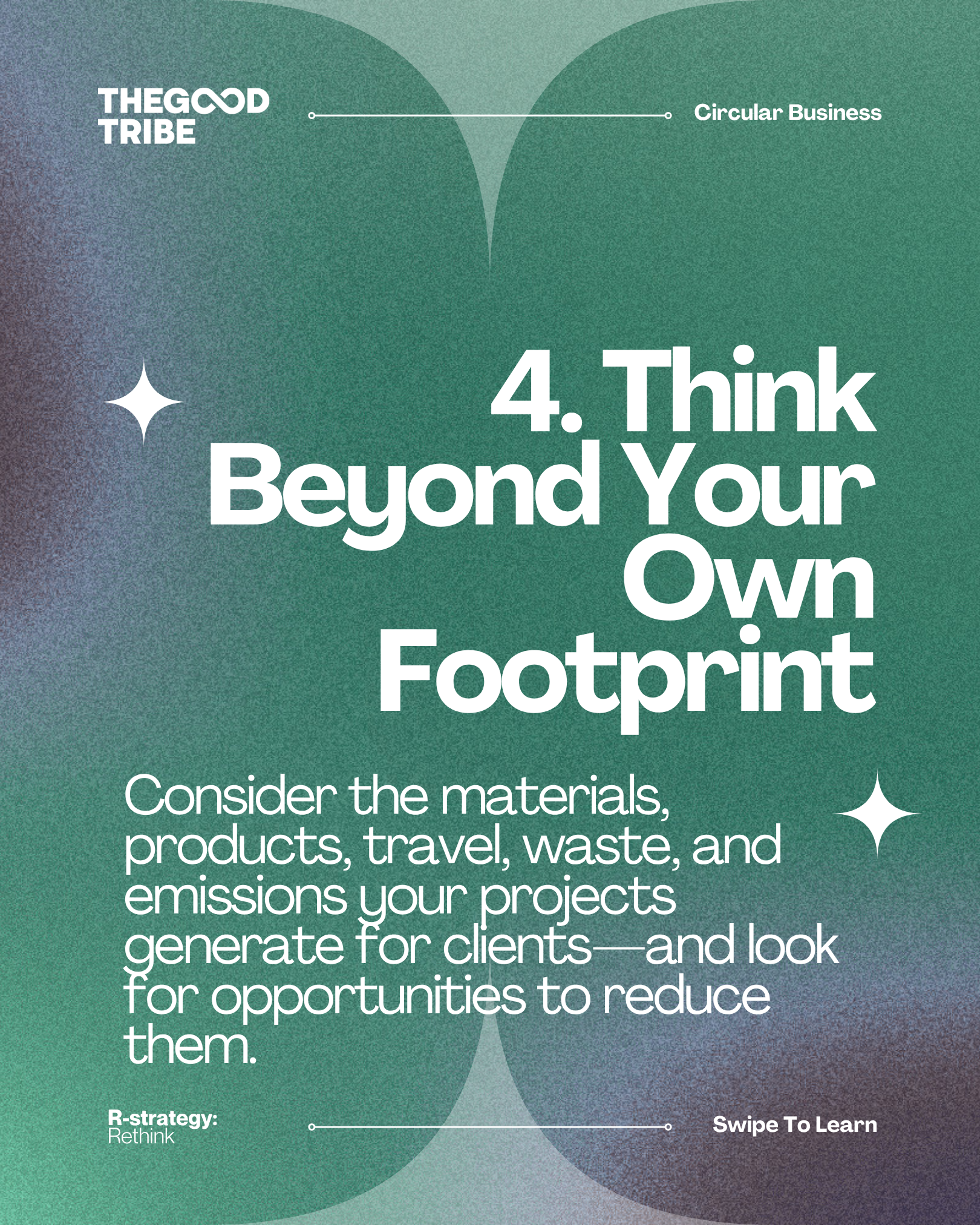
4. Think Beyond Your Own Footprint ⭐⭐⭐⭐⭐
This is my favourite one. Because this is where systems thinking begins. The environmental footprint of my own consultancy is relatively small. The influence a consultant has has on other organisations is in the best case significant.
Every workshop. Every strategy. Every procurement decision they influence. Every product or service a client redesigns. Every piece of waste they avoid. Every repair service they introduce. Every material they keep in circulation. That’s where the real impact lies.
As consultants, we’re not just responsible for our own footprint. We’re also responsible for the ripple effects of our advice. That changes the conversation completely.
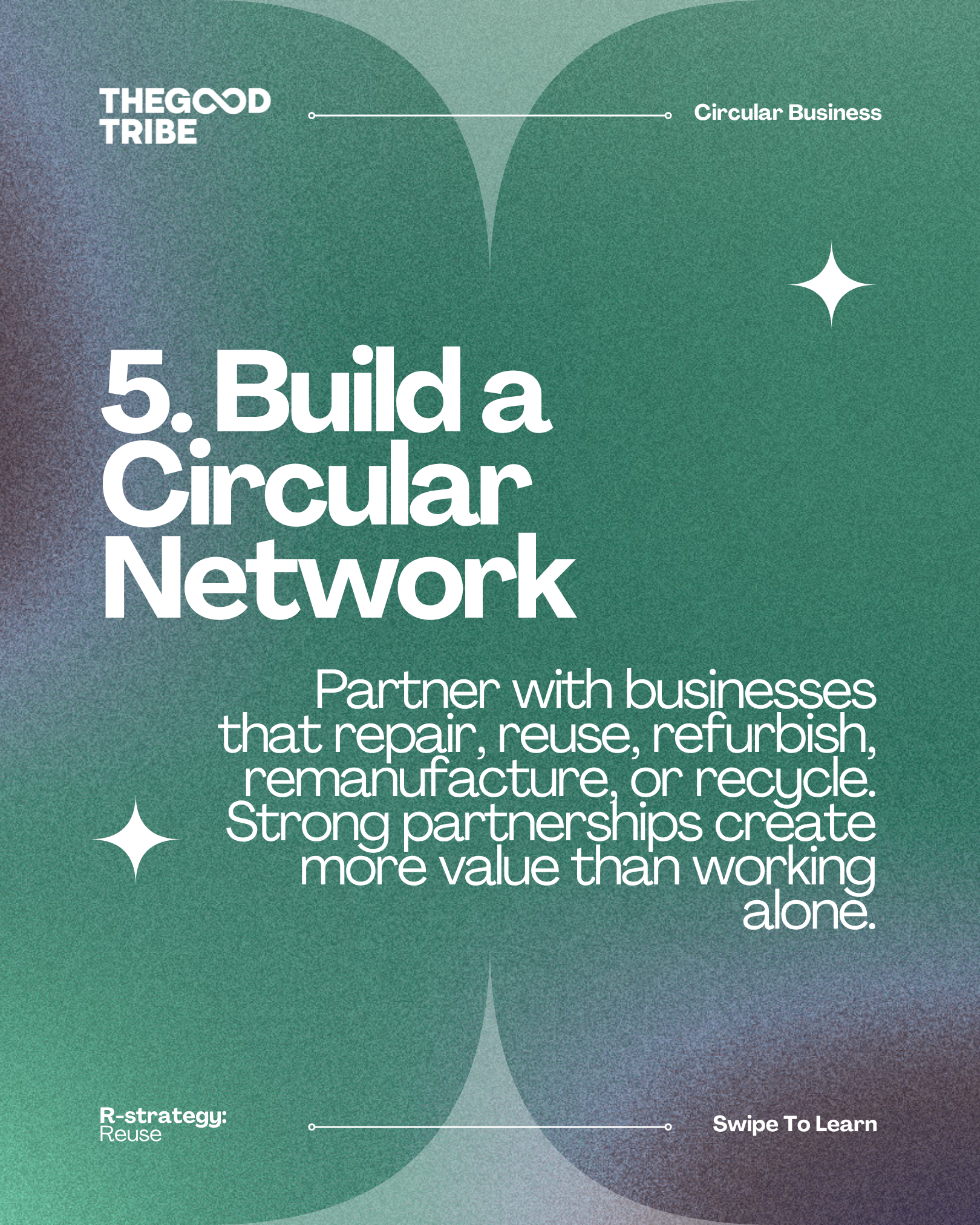
5. Build a Circular Network ⭐⭐⭐⭐⭐
This one is probably the easiest to score. Connecting people is one of my favourite parts of the job.
The circular economy isn’t built by individual organisations trying to solve everything themselves. It’s built by people finding each other. A repair expert meeting a manufacturer. A winery collaborating with another winery on reusable bottles. A designer finding a local remanufacturer. A consultant introducing two organisations that should have met years ago. Sometimes the most valuable thing we as consultants - and networkers - is connection.
Progress Over Perfection
Putting this piece together reminded me of something important. Circularity isn’t a destination. It’s a practice. Some things are surprisingly easy. Others are incredibly hard. Some challenges can be solved tomorrow. Others require entirely new markets, regulations, technologies, and infrastructure. That’s okay. Because the goal isn’t perfection. The goal is to keep asking better questions. To keep learning. To keep improving. One decision at a time. One client at a time. One partnership at a time. One circular business move at a time.
So now it’s your turn.
How would you rate yourself against these five ideas?
I’d genuinely love to hear where you’re thriving—and where you’re struggling.

Evelina Lundqvist, co-founder of The Good Tribe